Monday, January 31, 2022

 Que la bête [humaine] meure Pt. 1

 What we see on the screen is not the murderous anger of Lantier, but that of Jean Gabin.
- André Bazin


“Perhaps one third of the films might fail to meet cost,” writes scholar Colin Crisp in the practically mandatory The Classic French Cinema: 1930-1960, angling into an overview of the perilous situation in Paris betwixt the 20th century’s two major collective conflagrations…“and in a fragmented industry up to a third of the production companies would crash.” Don’t know about you, but this sounds like exactly my kind of mess.


Or does it?


Emile Zola, Guy de Maupassant, and Gustave Flaubert were the key 19th century salon culture literary eminences. We can introduce othersBalzac and Baudelaire and Symbolists and bomb-throwers of variable leaning—but you are doubtlessly able to see how things might very quickly get out of hand...

Zola and Flaubert especially become institutions in ways for which they are ill-suited and toward the reality of which they cannot help but become increasingly ill-disposed. To become institutionalized is one thing, and no small amount of relief can be shaken loose my means of boorishness, but to become institutionalized as an institution might well be too gross...trop trop...

These men, like Byron, are happiest when they fly the coop and luxuriate afterward in the retelling.

5e Arrondissement Paris, December 23, 2021

    Émile Zola wrote the 1890 novel La Bête humaine, a characteristically 'naturalist' tale of woe recounting the unidirectional decline and hereditarily predetermined crackup of locomotive engineer and alcoholic sex-murderer Jacques Lantier, to be played in the 1938 Jean Renoir film version—to be released pretty darn near the straight-up eve of invasion and harried flight, nary a reputable leg to stand on—by superhuman proletarian megastar Jean Gabin. Naturally, Gabin's parents were showbiz/underworld people, and colourful shirkers, thus, more than they were any kind of salt of the earth. His proletarian bonafides are earned through close contact and fraternization, doubtlessly, but he works his wrists like a dancer, in the manner of Chaplin, his eyes dancing and flirting too, especially when fishing for a little dollop of pity, and he's definitely both man and woman, in spite of [or just to bloody well spite!] the brawn and the ungentle manliness, the elements that will draw direct comment, routinely, as though that's the way to dispel the lower, lunar organics of the too-dashing beheld.         

 Zola's original novel appears not long after Nietzsche goes catatonic. 

Part of the larger and, to me, increasingly in'eresting [increasingly in'eresting to oldening me] point Colin Crisp is making early in The Classic French Cinema, is that a condition of international embroilment(s) already looks like war and destiny and a few other daunting things before it's making anything like that sort of sense to the people it is in the process of swallowing up whole. Foreign owned patents engendered a problematic situation in France, wherein competing interests delimited a specific, grim topography, much of this amounting to considerable, shall we say, influence being exerted upon French film production by German and American consortiums. 'Sound technology' patents, for example, underhandedly forced French production companies to pay for the right to shoot sound films; eventually Paramount Studios and the German company Tobis Film penetrate directly into French film 'domestic' production. French public and private life are surely what they are though one shouldn't necessarily be sure about that, and then of course we must hold this imaginary on-the-ground French reality in direct contrast with the economic interests of foreign enterprises, whatever we might imagine ourselves imagining those to be, such that there might then emerge a clear picture of how particular styles and modes of filmmaking come to act themselves out in the streets, studios, and warehouses of wherever specifically we wish to go with all this. Piece of cake, no? And guess what? Films in France that were set-up by Paramount were famously crap, always, basically, whereas those shot by Tobis did good business, impressed a lot of the right people, and may very well, Crisp implies, have continued being pumped-out as a matter of course if not for both the occupation and the results of the depression, which made the funnelling of French money into Germany rather problematic, on and off, not that French people weren't making movies under German supervision during the occupation (to the subsequent postwar detriment of many of these "collaborators"). Other national interests maybe aren't any different from 'other interest per se,' but as a progressive and unrelenting factor in the development of French cinema, these cross-lateral formations and wheeling-dealings start to make a real active picture of active complexivity making use of military and industry collaterally. Concentrated subdivisions [and subdividings] of social and economic bodies and/or structures, viewed as bad faith reductions committed inside a working laboratory of dynamic activities, is no go. I am not going to let the metaphysics escape off my history like some kind of steam. But neither am I inclined to cut too sharply the other way.        

Renoir's Bête '38. A title card gives us the dish; here's the English on it: “Sometimes he had the feeling of suffering for all the fathers and mothers, for the generations of alcoholics who had rotted his blood.” Tell me about it. It's my story. Although, also...try telling it to the judge. It may largely be license taken on the part of the subtitl'r, but I intuit a good deal more irony in Renoir's slant on this material than I do Zola's. Right from the get go. Renoir's a good libertarian-collectivist who loves nothing more than holding court at table, and his movie isn't about to grant any real credence to any idea of poor people's blood being irrevocably poisoned however many generations back, this being a conscientious man of the Popular Front who doubtlessly thinks of himself as much a good social scientist as the next especially extraordinary fella with a gullet full of good grog. His is what we might call a more broadly Marxist lay of the land.

There can be no doubt: Lantier isn't exactly Lantier, though, not anymore, because he is very obviously and monochromatically now the larger-than-life movie star Jean Gabin, as noted by André Bazin, our always-observant Man of Reverence on the scène. Lantier's terminal trajectory has more to do with the inevitable fate of the Jean Gabin "character type" in extremis than it does any E. Zola confabulation. The track delimits the course, men of low status feed the insatiable furnace. Control is extended outward in every direction and meets adversity with versatility. The character is not under control of the actor, the actor is not entirely under the control of himself or his director, and the complexivity of control is in a general way diffused, everywhere, such that intentional things and robotic/mechanical things are at clumsy odds with one another and themselves. The movie puts its doomed characters on the one-way-ticket path. It's a big part of what would come to be called Poetic Realism, a phenomenon that, along with German Expressionism, would help produce a tertiary phenomenon only to be known as Film Noir after the fact.     

Fire surrounded by darkness. Strife & darkness & light. Elaborated upon. Elaborate. Throughout. Imminent violence is put off peripherally in a darkness. Camera dollies backward. Engine room of locomotive. 

LOCO-MOTIVE | NO WAY, NO HOW

Two filthy engineers are shovelling coal into the fire, feeding it and adding to the strife. Renoir cuts to a shot of the wheels of the train, accompanied on the soundtrack by the thundering sound of the loco. The film proceeds to cut back and forth between the workers shovelling coal and communicating in a series of brusque, unintelligible gestures, with shots where the photographer's rig's been fastened, apparently, to the side of the speeding train, creating much tension, much strife. It immediately conditions us because maybe this is the condition of conditions. Our point of view, in a sense, is being linked both to Gabin/Lantier as he shovels coal into the fire and to the train itself.

Speed forward, out of control. 

So now: both Gabin and the train, and the gestural web, the careening interlacings. Many graphic links between elements overheated and approaching threshold. Straight line. Momentum. Inertial repose, clamour of demystification. Tragic destiny and exasperated productivity. The co-alignment of the film’s perspectival vantage with that of the ocularly disadvantaged train, augmented moments later when Renoir begins to employ shots literally from the point of view of the train as it speeds along the track. The train has been tricked into believing it has a direction. Did it buy a ticket to the present exhibition? Or does the audience just know that things aren't going to go well for Gabin when he falls in with that minx? Unidirectionally minxward, are we? The engineers continue working feverishly in the engine room as the world shoots by through the window.


Musée Eugène Delacroix, November 25th, 2021 

As Claude de Givray says, “If The Golden Coach is a triangle film and The River a circle film, then La bête humaine is a straight-line film.” As such: it is a preeminent work of Poetic Realism, distinct for lacking any direct contribution from Jacques Prévert, the idiom's for-all-time poet laureate. In his piece called "Poetic Realism," Dudley Andrew writes of a certain French cinema up and running here and there, intermittent as you like, between '29 and '39, that is "simultaneously lyric and realist,” and, just like our boy Bazin basically sees it, “is surpassingly realist and most French when it brings out formerly hidden relations between 'objects and beings,' between the outer world and the inner.” 

For all your talk of determinisms metaphysical or, dear me, social, I think I may indeed be a good bit more interested in the interpolation of wonky paragential objects and beings, played out in peripheral temporalities or quasi-alchemically embedded ones. At least on my best days. Structural modes and archetypes. The stuff bubbling up from the earth ['culture'] is inherently bacterial, the imaginary space weapons which make sense of us as far away things right where we are...upon the subject of these I do not wish to fumblingly prognosticate...[I'm no virologist]...

Centre Pompidou, November 24th, 2021

Jean Gabin is here with us and he's not doing anything especially unseemly....he goes to...he lights a cigarette and...just as the flame...just as the flame sparks up...his lighter...the train enters a tunnel, bathing the frame in darkness. 

A strange relation between darkness and light is once again once again. And once again the reoccurring link between: fire and darkness, fire comprised of and productive of dark materials. Adds to the air. Literally. Adds to the literal air of gloom and to the strife furnace.

  • The train entering Le Havre 

First. The train's point of view. A question of what? Surely not much more than an industrial fanaticism respective of the production of impossible gazes. Perspective. OF THE TRAIN. Here is your station. Your loco stable. Here is your topsy-turvy perspective on your perspective, the train. And consequently: all the assembly of gazes in industrial terms. Of which. Of which that perspective is curtailed. A hand-held shot. A dolly. Is edited. Into the middle of this one. Into which the camera pans frantically. 

Over the sign designating the Le Havre station. 

Series of cuts. Series of cars. Serial passagings-through. Suggests. Through a subdued field of sense, tangential, non-loco, for nowe. That La Havre carries with it a great deal of destructive significance. What is this station? In its particulars? What compels the impatient train to dally here? Slowing down of the train. Slowing down of the train and...and thus, perhaps, Le Havre is where the “straight-line” will hit a big open pit or twister. It has been invested with destiny. In movie theatres—Paris, Marseille—there are audiences projecting as hard as the beaming equipment. The need expresses itself in the form of a special pent-up attentiveness: impotency and potency all at once and so we suppose it's imperative there be a quite positively horrific bust-up. This is emphasized. And let me follow that up with my own emphases, please. A few scenes later, following. A few seconds later...and any number of us. Jean Gabin explains that he is upset about the broken axle because “it happened here.” Because the tragedy to which the film is speedily hastening is to occur in La Havre, stupid, are you with us? In which Gabin. Jean Gabin. In which Jean Gabin leaps to his death as his locomotive speeds away from the provincial town. Is significant. His fall is complete and it signifies loud and clear [however variably]. Thus by attempting to continue. Shots that mirror those which precede. Shot sequences creating formal congruities that make of the doom text a nifty palindrome.  Shots fired, fire returned. Jean Gabin is merely flinging himself into an even deeper abyss. He has, having wrangled whatever he's wrangled, secured his below-board ambrosials, and signed on dotted lines we don't get to know about, already however-inadvertently compelled his shovelling of himself on into that blessed furnace along with all 'n' sundry else...


Thierry Mugler: Couturissime, Musée des Arts Décoratifs, November 26, 2021


Jean Gabin, locomotive engineer and alcoholic and homicidal sex maniac, refers to his loco as Lison, confusing the mechanic, who thinks that he is talking about a woman. 

Later when Pecqueux talks to him about women, Lantier exclaims that he is “already married to Lison.” A moment later when Pecqueux asks him about his plans, Lantier replies that he will “see her [Lison] through the workshop…then go see my Godmother...”

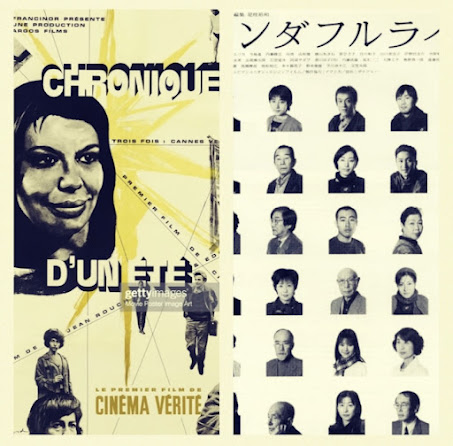
Pigalle, Paris, November 26, 2021

ARTE-FACT

Wednesday, September 15, 2021

Orphic Line

What day is it 
It's everyday
My friend
It's all of life
My love
We love each other and we live
We live and love each other
- Prévert

Text of bliss: The text that imposes a state of loss, the text that discomforts (perhaps to the point of a certain boredom), unsettles the reader's historical, cultural, psychological assumptions, the consistency of his taste, values, memories, brings to a crisis his relation with language.
- Barthes


1. Devil-headed. Severe. Those who transfix and those who fall under the wheels. Those of boredom aside also. We are here to stand and observe before the bliss-text. Remarkable, such as to bear remark and ravaging. We used to speak a good deal about the blind diode as a means to not speaking about vantage point. I am on a circuit board; I am shooting out with speed. I am moving suddenly longitudinal and suddenly latitudinal, and I am moving faster and faster because this ritual is pure thirst for me. A film critic I like once wrote: "There's an exciting brand-new object in the world, and it's called Moulin Rouge." To that I counter: may it ever be so...

2. Barthes, the wise and blister-prone observer and negative flâneur, reminds us, in Pleasures of the Text, to make the effort to keep our pleasures leashed and domestic. Pleasure, at any rate, is already the process of counter-pleasure because pleasure cannot stop its fervid demystification of the already established. The mystical part of our pleasure becomes like a phantom limb or a vestigial one. Yes, okay, Love is Our Secular God until Love is no more than Sputtering and Suppurating Intensity. Right. Then it becomes the God of Life Itself. The Secular God had closed down shop and hoped to squat there indefinitely with the curtains drawn. Orpheus from Underground, Oedipus the Hero! Where do you stand in this complexivity of fetish? BLISS|OBJECT. How do you get your groove back, Stella? Are you just myth bound to desire and terminal flight? Wherefore art though, Moulin Rouge?

3. Getting out of prison and trying to stay out, Our Man Jackson declares war on society, buoyed by Love Moist Elemental [read: Aristotelian]. THE SOCIAL [myth] seeking to put Love [sex/kink hoodwink] back in the spot where it belongs. (Spot is a dog's name.) All blockbusters hate themselves. All blockbusters spend a lot of money on things to put into themselves in order to pretty themselves up. Is this auto-critique? Is this auto? Maybe it's mightily multiple! We begin by entering the giant complexivity of sideways spectacle and the scaffolding where its future parts are to go and erect. Theatrical as all this is, our introduction having commenced with the insinuation of actual material orchestra in the flesh (and gabardine), 20th Century Fox was always going to need a wand for that logo, this stolid monolith looming before my baby child. Immediately it is both clear and not so clear what a whore is. The onus is evidently on me. I had not been looking carefully, Ferdinand, but the wand has a conductor, and the conductor is attached also to the orchestra. I'm kinda freaking out here a little! Okay, okay. The ambiguous placement of the conductor-agent makes me realize I am being misdirected by aristocrats with sinister stratagems. I wonder where they all are. Come out, come out, wherever you are. I intuit incoming fatalities.

4. Spectacle is an additives machine. Bohemians love additives. Making of Love a Pop Sickle. Indulge in your fetish; pounce on your prize and pulverize it. Holding God, Holding Love, Up Against the Duke. Up Against the Pistol, motherfucker. Tragicomic, inevitably. A rigged game; a rock video. A sad song, paint-by-numbers. Its bliss remains intact. And in text. Golly, guys. I think it prepared its critique before it came out to join us! It has been fooling us and fooling us hardy, trafficking in tonal sets and subtonal subsets and stuff. It has been positively throwing singers at Love. If you cannot sing good, please step aside. If you are a backstabbing son-of-a-bitch, you may be upper management material. I love you truuuly...truuuuuly, dear. As in certain films inside certain films by Cassavetes, Love can and very much will fake it 'til it makes it, because that's how you remember the words to "Remember, Remember, the Fifth of November..."
5. You, whoever you are. You have a date with death. And then another and another. Forewarned is forestalled. You have a date, too, with the Moulin Rouge. For me, you are a whore. For me, therefore, you are both a bliss and a fetish. They made a film about you so that you could become all tore up by the complex, with its bureaucracies and intelligences all its own. The bliss text is a honey trap and occasionally takes this up as its subject matter. You got that, kid? Dukes and Pistols at Dawn! Whatever else bliss does, it stands and it spritzes counter to any ideology whatever.

6. The economic problem of surplus is nothing more than the problem of surplus, but then as such it becomes the problem of too much of everything, per se. Is the ending of McCabe and Mrs. Miller nihilistic? Per se? You are just buying the farm in the snow. Listening to Leonard Cohen. Per se. Am I mistaken? A kind and generous resistance indistinguishable from affably stupid generosity of spirit. A guerrilla business ethics and general tone of giddy affirmation. Bliss just keeps on keepin' on, dead on its feet or dropped to the bottom of a child's sinking wish hole. The New may assert its unsteady rights. Inhabitants you've never met may well lay dubious territorial claims. Such bliss! It moves out in all directions and it plum courses. Robert Altman has sheepishly admitted that he simply does not often know how to end a movie without a death.

7. Gilles Deleuze and Félix Guattari: "The more the archaic empire overcoded the flows, the more it stimulated decoded flows that turned back against it and forced it to change. The more the decoded flows enter into a central axiomatic, the more they tend to escape to the periphery, to present problems that the axiomatic is incapable of controlling (even by adding special axioms from the periphery)."
8. The beauty of a terminal or fatalist model is that it cannot help bucking it to the system. The machinery doesn't work; let me demonstrate. Do you see? Overcoding vs. arterial spray. Keep your resistance spraying like a wacky hydrant...and none too idealistic. When the hero dies at the end of a Robert Altman movie, elimination of one particular computer occasions a blissful apocalyptic trans-systemic (complexivity) resonance. REAL CUBAN FIRE. [The Brown River (Great She).] The register of resonance OPENS. A screaming comes across the sky...runs a spread on the network.... The problem of the computer is a headache for the circuits. Name it a failure, and, like each and every one of us, this or that computer will have every right to tell you...especially as we might now be discussing the Sun itself...that its failures aren't its failures so much as they're just its characteristics...

9. If you go to the Moulin Rouge to work there, you already know it's your head. Entertainment is murder and your boyfriend is threatening suicide. Again and again. You think you'd learn to read the marquee. The squeaky mice get real oiled. Boy Orpheus is in town; many a lass must lay down her life. When Michelangelo Antonioni (famously) brought L'Avventura to Cannes, he told everybody his new downer of a picture exposed the 20th century's spiritual malady, his greater [debatably] point being that moral, desiring, and above all spiritual development had grown, at best, static. It is amazing how many problems the people in The Iliad are having the we are having still today. My goodness! And yet technological progress literally skyrockets. Are we afraid of our databases and the broad beyond-backroom schematics that are their ever-moistening future? Do I use the word we satirically? If these and other questions are not on the back-burner, it's simply because I doused them in lighter fluid and burned them to crisps altogether very expeditiously in the tub!


Wednesday, September 8, 2021

Scènes condamnées

As for me, and I come back to it, I attach enormous importance to form.

Enormous. And I believe that the form leads to the rhythms. Now the 

rhythms are all-powerful. That is the first thing. Even when one makes the 

commentary of a film, this commentary is seen, felt, at first as a rhythm. 

Then it is a color, (it can be cold or warm); then it has meaning. But the

meaning arrives last.

- Robert Bresson

A Man Escaped (Un condamné à mort s'est échappé ou Le vent souffle où il veut, Robert Bresson, 1956) 

The profoundly impassive man of curious scalpel-precise expressivity is named Fontaine . He is played by a non-professional (François Leterrier) the film's director calls a 'model,' this the term he uses for the entire on-camera company. He is condemned to death in the film whose title tells us so 

just as it tells us, at least in original French, that he is to ultimately escpae with his neck.


There are the man's palms and the business of their irreducibility of business. They have to be busy. Somebody let me out of here. Palm up on lap. Weighing light. Weighing the weighing of the question of weighing light. Weighing the weight of the very supposition of light. We are in the back seat of a car, traffic noise can be heard but it is distant and impossibly [calculatedly] soft. Hands turn over on the lap. Irreducibility of the hands. The image encases us in the back of the car while the sound provides us corroboration of an outer world swamped in cotton swath. Bresson tells us that “freedom is greater with sound.” Here the sound literally represents the terrain of liberation, the outside, while the image places us in the back seat of the car, effectively already in prison.


An air of urgency, made to order. For a film about a man we already know escapes having been condemned to yet-to-set-a-date hangman's checklist, and yet the idea is that the mechanics of perception might make us make up [comprise and preemptively reprise] a hot and bothered invested-in-the-urgency...donkey.

The driver’s hand on the gearshift, prisoner reaching again for the door, waiting, waiting, pushing open a moment for acting, little fingers tadpoles, critical breathing, inimical breathing, clearly a sense of apprehension mixed with desperation. We hear a horse drawn buggy on the soundtrack but are unable to place the sound until it is corroborated a moment later on the image track. Throughout the film strange unknown sounds are presented to us only to be explained later visually. There is the buggy; there are the voices of the German guards who approach our man and take him to his cell moments later; there are the guards who come to our man's door throughout the film, revealed by their footsteps, their voices, or both; and most strikingly there is the squeaking of the bicycle during the escape sequence, which remains a mystery to us for a good ten minutes before one of our big kids on the skids finally peers over the wall and sees a guard riding it. Over and over we are left free by sounds only to have many of the holes filled in by the image. Many sounds are never filled in by the image. The guns that execute the prisoners in the distance are only ever heard. The voices of the guards are almost always disembodied. Sounds of movement outside the cell maintain a perpetual air of mystery.  

There are two specific ways sound is used in A Man Escaped to field dialogic resonating complexes (real) with respect to dynamics of freedom (virtuality) and containment (actuality). The first way is of course rather obvious. Sound as a terrain of liberated virtual space and invitation to abstract/virtual extrapolation/cartography. The world of flight and ESCAPE LOGIC contains sound, eavesdrop, resistance, unencumbered hands, and light(ness). The world of prisons is the image, the car, encasement, the bolted door

André Bazin espies in the film a suspension of space/time and a stunning absence of “dramatic geometry.” However, our man, lieutenant Fontaine, the model attentif, can hardly afford to come at matters from a like mindset.

We are unable to draw a suitable map of the prison in our minds. Or have we simply not had to try that hard?  This is exactly what our man is doing. He is branching out with his ears at night; documenting with all of his senses by day. All we see is waiting, or, more accurately, waiting counterpoised with bursts of effort and risk. We are confronted, just like our man, with the liberated space of sound and the imprisoned space of action-image. We too are building a world around the action with our ears. Quite simply, our eyes are situated on one side of the wall and our ears on the other, while we remain outside of the film. We build a film we watch and hear lined up against a wall, martial takedown or liftoff, experiencing points of connection, convergence, and intensive disjunction.

At the same time: guards, industrial machinery, draconian aurality. It is precisely these sounds that make it so hard for our man to carry out his escape. Using his ears, “dramatic geometry.” He is confronted with many sounds that re-inscribe imprisonment upon the sensorial body, connecting our man and his audience together through sound. It is difficult to “take the plunge” offered by the liberating enterprise because everywhere sounds retain their music of the prisons and ritual debasements. As escapes open, prisons re-inscribe: the plane of exposure. As soon as our man and his boy conspirator leave their cell there is no going back and this cannot be anything other than a done thing considered from any and every angle. All sounds become condensed, intensified. Sounds emanating from sources organized to vouch for and stage imprisonment can map a “dramatic geography,” or can be perversely fathomed to further induce productive building and risk within a context of conditional exposure The man arrives at the point of hearing himself and hearing the doors bolt shut there too. Or this is presumably what is at stake. (If I know it, it's 'cause I feel it first!) Sounds become important on the plane of exposure and then become the enlivenment of the planar exposure. What is most frightening to a man is his own future voice (preserved from one local-specific execution or not). It is “the noise I made and the constant fear of being caught.” The electric charge of chance further condenses and distills the sensory-motor vibrations while simultaneously increasing intensification in general. A realistic/naturalist bodily tension is created, nowhere to be seen (or heard) in standard prison movie fare. 

It had been cemented at the outset. Hands reach for the door, as such reaching merely and instinctually for the perhaps better. A sure hand conditions these tremulous claws-in-search-of-nook. Apprehension and desperation. Hand pulls away nervously, only to regenerate the gesture again and again until the courage is there. The ears are builders of the plane of exposure and the fingers tickle invisible ivories. The model must bridge the gap with his tools: hope, the momentary courage to act, the prevailing dumb luck that is all that which is left standing in the interim (the circus tent never an adequate hangar, this it's preeminent virtue). 


We bust from the car. Bust out. Blast off. 


At the beginning of the film. 


We are shot at, you are returned, I am beaten. It is because somebody lacks the third and final tool. Too many critics have mistaken this tool for something other than dumb luck. It is something other than luck, though, unless luck vibrates. Shut your mouth a moment and look upward. 


The hardest lesson I ever learned about escaping was to shut my goddamn mouth.


Tuesday, September 7, 2021

PHILIP WIERZBA IS THE REAL DEAL


I have been thinking recently, particularly late at night when Lydia goes to town to see a movie with her lady friends, of my brief business relationship with Philip Wierzba. It was some years back, when I lived in Canada and still worked in the legal profession (please don't ask!). Late at night, when my mind finally wanders from the rheumatic anxieties of the day, I think about the first time I met Mr. Wierzba on 47th street at Sam Kabobby’s All-Night Diner fix.

It's the final minutes of the day, when they are doing their thing and I mine, surrounded on all sides by silence, Philip Wierzba slipping through the shadows, grey sheets hung out, one half mile from his dark third-floor apartment. Anyone passing him on the streets would have noticed, conspicuously suspended in the tight grasp of his clenched left (conciliatory?) hand a weary looking manila envelope festooned with a large, seemingly official stamp. Now, any guess as to the nature [furtherance] and content of that envelope would have been common hearsay, both because of the unreconcilable contradictions in the appearance of Mr. Wierzba, and because of the consummate weirdness implied in the very principle: clandestine landscaping figure, looming like animated monument, sliding through the grey sheet streets of this, the infamous northern end of town. He would have been an impossible man to place and his business could have been anybody’s guess. On the rather extraordinary subject of Mr. Wierzba’s appearance, I shall take this time to note some of the presiding elementals: 

He was dressed in a long, dark, Hamlet-like coat. The Dane.

He was wearing an old pair of horn-rimmed glasses like a goddamned owl and a brown journalist’s cap that had seen a great many better days. 

Stylishbut strangely small, and mainly strangevest in rather, uh, pressing need of ironing. A dirty pair of white tennis shoes. 

All this was combined with theand this is the only way to describe it!—incomprehensibly childish character of Mr. Wierzba’s waggishly youthful face (in the mouth of which was perched a lengthy, manure-smelling cigarette, of explicitly foreign origin).

Mr. Wierzba is as rigorously intelligible as an open book and was so as soon as you set eyes on him, his tending to carry himself in a rather regal, yet simultaneously absent-minded fashion. A girl we both knew (!) said she thought he betrayed the impression of being wrapped like a gas station tuna sandwich in a sort of mysteriously wealthy clown wrap, or perhaps a drunken aristocrat cloak. One way or the other, it is safe to say that Wierzba is incapable of moving through an urban setting/environment without causing something of a mass panic, eyes violently collating his every baroque movement, children being shielded from his wobbly approach, folks changing their course to avoid the inevitable altercation with him. These responses, as well as many others cast under a similar aspect tend to follow Philip Wierzba like a catamaran plague. However, on the day in question, he was in the part of town where nobody seems to pay him any notice, perhaps explaining certain underlying reasons for his having chosen it as a place to live shortly thereafter. He was drifting furtively through the dusk totally unnoticed by anybody excepting small dogs and the odd child. (Odd, to be sure!) Even those who periodically would pass him on their way(s) home from a friend’s or whatever or rushing off to some place of debauchery, say, would not bother to turn their gaze toward Wierzba. And those who would quickly feast their lifeless eyes upon the towering cuss would not expend the energy necessary to dwell upon either the beheld or the beholding. Philip Wierzba felt as free as he ever had in his whole life. I know this because it says so in one of his journal entries, which I have splayed open across my oak writing desk at this very moment. Here is an image of him camped outside the Apple Store, gearing up for that saviour hour...
At the exact same time that Philip Wierzba was discovering freedom, I was reading the Friday paper (it was Sunday), alone in a discreet booth at the back of Sam’s. Wierzba's choice, not mine. I was waiting for my mysterious guest to materialize. In truth, I had chosen the booth at the back so that I could drink from my flask of Scotch undetected. I would be deceitful if I said that I was not a little nervous about the meeting. I had never met Wierzba and had only talked to him briefly on the telephone two days previous. He had called my office desperately demanding to speak to me, this pro-pulsed by an apparent recommendation from a close friend; my secretary had repeatedly insisted that I was too busy to talk, but apparently he was rather obstinate, a claim which I was soon to validate through my relations with him. He could not be deterred. My secretaryI think it would have been "Damn it" Janet Turner at the time, an all together pleasant womanwas eventually forced to relent, pro-pelled to total mental exhaustion at the hands of the painfully insistent churl on the other end of the line. She handed the wireless telephone to me with a look of dismay and a quick semi-coherent apology as she rapidly scuttled back out to her desk. My first impression upon speaking to Mr. Wierzba was that he was totally, stark-raving mad. I am not sure if this impression originated from what he said or the manner with which he said it, both of which were rather immediate in their peculiarity. Definitely, though, this was my impression. His voice possessed a bohemian, mock-professional/professorial inflection of the kind one would tend to associate with young, absurdly contrived hipsters. However, this quality was offset by his immediate and clock-regular proneness to flights of half-lucid fancy. For example, a brief explanation as to how he had come into possession of my office phone number quickly evolved into a treatise on dwindling privacy in the late 20th century, which in turn shifted his interest to some friend of his who had, in the early 1970s, been under constant surveillance by at least five prominent world governments. ("Not to mention free-lancers," I recall him adding.) I retain a vivid memory of having become very interested in this strange voice rather immediately. Many of my colleagues in the legal business, I can imagine, would heave most likely, after concocting some vague excuse and dispatching some necessary pleasantries, hung up on Philip Wierzba without the slightest hesitation. Something held me there. Something prevented me from putting down the receiver or fabricating some quick lie about a meeting. It was not so much that I had nothing better to do. I was actually rather busy, I recall! It was simply a case of my having become unwittingly interested in this man on the phone. I was ready to entertain what he had to say. He, I figure in retrospect, totally sensed this...

As I was taking a hit of Scotch in the back of the diner. I am sure. I am sure. I am surely sure, sir, that all of this information was filtering through me. I must admit, sir, sure, that my recollection on the...the matter is...hazy. Sure. Surely. Both in lieu of the slow... stinting effects of the Scotch and because of some anxious residue retained from an earlier argument with Lydia. Oh, fuck me. One of all too many that day, that week. This series of arguments had been surrounding and covering [combat through grey sheets and streets] my penchant for periodically not calling her or coming into contact with her for exceedingly long periods of time. I felt her to be overreacting, mostly because we had only been seeing each other for a very brief interval and because I did not feel that I had been avoiding her. I chalked up her irritation and tension to the fact that she had recently, for baseline economic reasons, been forced into taking up a job as a counter-girl at a doughnut joint whilst I held the comparatively superior position of lawyer.

At any rate, one thing I recall quite vividly about that early evening at Sam K’s was the particular urban squalor of this unusual place. I wondered at Wierzba’s potential motivations for having chosen it as a place ideal for his specified form of legal consultation. I cannot remember the waitress, and, of course, there must have been one, but I do remember that the only other two people in the place were drinking coffee alone. A middle aged woman, with her face caked in many-day-old makeup and the rest of her cocooned in an almost tangible aura of despair, was sitting up at the bar. (As this was/is a "diner," I suppose you cannot really call it a bar.) She looked like an old, diluted prostitute making the best of a still intact, but fleeting, lucidity. Looking at her, I remember being flooded with a sort of melancholic grey of sheet street. She made me feel sad, uncomfortable, and ridiculously alien. On at least one occasion, the image of her, sullen and detached, pushed me to the verge of abandoning the diner and consequently of aborting my imminent meeting with the strange and insistent Philip Wierzba. She turned to focus outside the diner with an expression that appeared as if to be fixed on the dissolving ghost of a long-gone lover, suspended in the atmosphere before her, and it was nearly more than I could take. She held a violent air of division. She was the Living God Twitter its pre-incarnate and incarnate and post-incarnate self. She was drinking straight from the moat surrounding the Tower of Living Babel. There was also a man sitting in the furthest booth away from me, next to a primitive and I suspect long-since-defective jukebox. If not for periodic spasms in his left shoulder that would trickle with seismic accession down his aging arm, I would have taken him for dead. I only saw him sip from his coffee cup on one, fiercely laboured occasion. He wore a tattered old Expo’s cap and a thinning shot-to-shit tweed. I was too half-drunkenly terrified to look him in the eyes. This seemed no place for me to be in my present condition. 

Despite the fact that I had been carefully analyzing the street through the large front window, I did not see Philip Wierzba until he came sweeping through the second set of diner doors. He entered like a figure in total, perhaps self-mocking control of its surroundings. I knew immediately that this was my man.


He carried an energy with him. And a sweetness. It conveyed itself in his face, his countenance, every aspect of his aspect, and in his movement too. It had been in his voice two days earlier. I had felt it even over the phone, a sense of clarity and drive. There was a causal purity to him. He approached my table with a strangely clandestine lack of eye contact. It was as if he were trying to avoid having our meeting seem anything more than entirely routine. I could not imagine who he might think would be watching us, but I played along anyway, maintaining a drunken disassociation. First setting his large envelope down on the empty table, he silently lowered his wiry body into the seat directly across from me. His mind still seemed to be wandering off elsewhere and he did not speak. I was half glancing at the envelope and half summing up his physical appearance. To this day I cannot understand why his manner and dress did not alarm me; I have already described both, and thinking back on that moment it strikes me curious that these have not been more thoroughly analyzed for clues. I have no real explanation whatsoever. What at all even is this lack of prurience on my part? Suffice it to say that I was not myself that day and that my faculties of judgment were rather bleary. After a minute of silence he furtively shifted his gaze toward me and, immediately comprehensively summating, spoke to me for the first time. His voice crackled and broke. Any trouble finding the place? he asked dryly, with limpid disinterest. Not really, I responded. Good … good. He ran his hand slowly across the envelope that he had placed on the table. Let's get down to businessBy all means. After my having said this, Wierzba seemed to drift back off into his own endless thoughts. Then, without anything resembling a preliminary flurry, his face jerked as if awoken from an ongoing, infiltrating dream or perhaps a local anesthetic. Over the periodic surfacing of which he held no authoritative control whatsoever. I … I have a small …  a small proposition for you … so to speakHis voice  trailing in and out and crackling staticky also. His eyes darted about defensively. I was startled that he would talk in such a fashion. A client had never come to me before with 'a proposition.’ The term suggested to me a partnership as opposed to a normal client/lawyer association. It also kind of scans underworld. Such unfamiliar, and perhaps suspicious terminology made me somewhat uncomfortable. Despite this I politely asked him if he wanted Scotch, which he did not, and then encouraged him to pitch me. To put it simply: Do you think I could get a drink of that? He was pointing at my flask. Wait, what?..you just... He merely kept pointing at the flask as I trailed off. I reached across the table and handed it to him. Go crazy. He smiled and drank. I have been doing some rather significant work of late. Dangerous work. And I'm looking for intelligent men in the legal world to do some work for me. Well, not so much work as much as, well .. I am looking for some very easy assistance. He looked down again at the envelope. I am looking for reliable men to hold onto certain…certain unguarded documents. These documents have come upon my person, I must admit, rather…well, rather illegally, but you must understand that my possession of them is necessary. Someone must bring these things to light and it seems, well, let us just say that it appears that I have been chosen.

Chosen for what? 
I asked curtly.

Well, since you ask. The way I see it is that it is up to me and it is my responsibility to blow a hole straight through certain acts of…let us say corrupted acts and actors. He accompanied this remark with a very peculiar system of interconnected hand gestures. Certain people seem to think that they are impervious to the general tenants of quote-unquote "democratic political practice" and that they can get away with whatever they want. It is my intention and the intention of my trust to, well, you know, teach them otherwise. He finished the contents of and passed my flask back to me. His eyes settled into a strange indolence. I sat back and hit the Scotch. But there wasn't any. 

Look I don’t know who told you about me, I said taking another lazy hit off nothing, but I am afraid I must tell you that I’m a small-time insurance lawyer. I’ve never stolen anything of any greater value than an O Henry bar, which I’ll have you know made me feel so bad that I went back to the store, crying, and returned it to the cashier…I was ten

Philip Wierzba looked at me confusedly. 

I’m not James Bond, I added, after a moment’s deliberation.


Saturday, September 4, 2021

On Irony 2021: An Erotic Fiction

  1. He says, “I grasp your thoughts well in advance of your becoming so-to-speak aware of them.” He that says is the young, chestnut-haired student fishing coins out of his jeans. He that says is tipping the cab driver. 1998, Ottawa.
  2. She undoes her red hair. Shoulder and street lights. She stands next to the cab in the early morning breeze of late summer. She issues a concerned expression with her painted mouth and picks nervously at a crease in her black, strapless dress.
  3. He says that there is no reason to be alarmed. He pulls a pack of Camels out of his tattered blazer. He says, “I am a peaceful oracle…I would never use your thoughts against you. Besides, you are a veritable innocent…you have nothing to be ashamed of…”
  4. He has that boy grin. She has that matronly concern.
  5. She says, “Do you mean to say that you have been listening to my thoughts since I approached you and your friends in the bar? Do you mean to tell me that you are a psychic and that neither you nor your friends sought to warn me of this highly pertinent, and perhaps disturbing information, in advance of your, shall we say…landing me?” The laugh that follows is an uneasy laugh.
  6. He says he is no psychic, cupping her slight hands in his darkened palms.
  7. The cab pulls away from the curb and disappears.
  8. He and she are doing different kinds of physical touching as they walk.
  9. Chrome door at the back of the house where she unlocks the myriad rusting latches with a key eventually scrounged up, after much insidious shuffling of bills and crumpled receipts, from the lower depths of her snakeskin purse. Showing him up the dank wooden staircase to her father’s attic.
  10. She says, “This is my room.”
  11. He smiles and moves up three steps in order to kiss her for a long moment in the doorway.
  12. The room is painted dark purple and its doors, oval window, and picture frames are all trimmed black. At one end of the room there is a small kitchenette with a stove, oven, sink, miniature refrigerator, and stacks of black milk crates. At the other end sits a small futon mattress surrounded by candles. Anaïs Nin, Byron, Shelly, Wordsworth, futurist Russian poetry, and large harcover anthologies, as well as numerous Penguin paperbacks and a picture of the young woman’s family feeding ducks in the rain by a large Canadian lake. In the photo the young woman, who is twenty-six years of age at present (1998, Ottawa), appears to be no more than seven. Gaudy Christmas lights are stapled to the walls and appear to be the only potential source of light other than the candles. Whatever available light there is reveals prints of all the famous paintings, such as Nightwatch and The Kiss, the amassed roughage hung randomly on the dark and somber walls as if flung there—
  13. She places a record on the phonograph.
  14. "I positively loathe all manner of modern music," he deadpans, and she shoots him a perturbed look. She has put on Bauhaus.
  15. “What about the Moonlight Sonata?” she asks, maybe disingenuously and definitely distantly.
  16. He says, “No, no, Mozart gives me anxiety. I can’t listen to him when I am drunk.” She has a swing in sentiment. They cozy up for a bit.
  17. Giggling strangely, she goes to the stove to boil water, and he walks over to the phonograph, grabbing a different Bauhaus record from the top of the pile and dropping it onto the player. The record begins to spin and the student slowly lowers the needle into the black grooves at the very edge of the acetate.
  18. She asks him if he is really an oracle.
  19. He begins to flip the rpm switch on the phonograph back and forth so that the music plays at the right pace one second and speeds up comically the next. Naturally, she asks him what he’s doing.
  20. He says, "I’m becoming…I’m becoming part of the creative process. If you give me some wine I promise I will tell you everything. In all truth, I generally do only drink red wine, but this, I am sure, will be just fine for now. Okay, I will tell you everything, but first you must promise to listen to everything I have to say and then wait until I am finished before you respond. Like, okay. When I told you that I was an oracle and that I had been reading your mind, as you may recall, you had just finished telling me about your male friend with whom you were supposed to have some celebratory drinks tonight, what with it being your birthday and whatnot, and you complained about his insensitivity and about the horror you felt at his not showing up. You told me over and over, all night in fact, whether you were aware of doing so or not, that you were repulsed because nobody has ever been so cruel as to have ever subjected you to rejection so…abjectly. In such a…a birthday-like situation. I sensed that you loathe solitude more than any other fated thing and this is why you project a guise of individuality and a self-reliance. It is a mask you wear in order to hide your real face which fears, more than any thing else, abandonment. This was only emphasized by the way that you spoke of your fellow employees at the department store, who make you self-conscious and bitter precisely because they are so friendly to you. Yes, but they are stupid and insensitive, sure, but you still need them to like you, don’t you? Yes. Complete and utter abandonment. Also you spoke a great deal, roundaboutly mind, of your love for your father and your contempt for your mother, thus, unwittingly, drawing attention constantly to a conceptual placement of your ego-self within a quintessential embarrassing triad. Now, the whole effect of my feigning being an oracle, blessed with a kind of gift of clairvoyance, was intended to be one of fissure. It was hoped that by opening our gradual discourse of mutual codes to a real psychic, electromagnetically phenomenological framework, the Oedipal triad would be torn asunder by its own dunderheaded and hugely stubborn impracticality. You understand? What purpose does repression maintain in the face of clairvoyance? You would no longer feel a need to authenticate your guise through these boring reminiscences or whatever, while simultaneously offering yourself to me so openly. I mean, right? The systematic placement of your parents on opposite poles of a psychic tug-of-war! It was hoped that you would espy no longer value in suppressing your more authentic proscriptive codes beneath the inauthentic centralized defences. All that about the human mechanism which is plastic, false, pretence. You understand? I was not interested in seeing the scars of your socialization! I hoped you would see that I, being a psychic oracle, could easily see through the pretence of subjecthood that you so fiercely present, its reification utterly fatuous. I was addressing a series of codes under the pretence of making conversation. It did not matter whether you believed whether I was an oracle or not, nor even whether I could actually read your thoughts. Just by processing the codes that I presented you were forced to apprehend your environment and the consequent goings on between us from a more open perspective. I was trying to do you a favour, I think. I was trying to do us a favour, babe. Repression is the enemy. I was saddened to see you so painfully repress your fear of abandonment. Whether you see it or not, I am actually even doing you a favour just by coming home with you. I am placing a much-needed break in the cycle. Are you beginning to understand?"
  21. She feels bullied and says so. But she commits internally to retaining some good humour in the face of it all.
  22. He says, “I know, I know. You see how easily I get sidetracked? I like this wine. You see, although all you folks are right to trace the genealogy of irony as a modal apparatus first and foremost back to Socrates and then Kierkegaard, like history were merely dominoes of some shit, I have problems with them. Particularly with Kierkegaard. You see, Kierkegaard is correct in assuming that irony enables a removed condition of spectatorship over the goings on of human life, but he is, I believe, specious in his directing irony away from play and into a further avocation of grounds for religious faith. You, being a student of literature, must be familiar with Derrida’s concept of play within the realm of theory. Play is the result of our being cognizant of our inability to ascertain our ends, our finitude. Have you read Speech and Phenomenon? No matter. You can see it in Foucault as well, and I know you’ve read Foucault. He has his theory of the paradox of origin, paradox, of course, being fundamental to Kierkegaard’s notion of irony. The Order of Things I think, which states that while the question of origin always returns to us, bearing the pressing voice of necessity, our capacity to retrieve it is ever slipping away. We are caught in a vortex of fundamental paradoxes which underpin even the first instance of the newborn’s perception. We are always staring the impossibility…the impossibility of our ends…staring them…in the face. You see? This can be expanded to a point where we realize the impossibility of our imagining, since we are cognizant beings and thus endless processors of code, the possibility of our own death. And beneath these fundamental paradoxes lie a parade of miniature equivalents which decorate all of our moments of connection whether analytic, and thus basically objective, or synthetic, and therefore not, or not really. Everywhere we look we see contradiction in the gaze and the contradiction or impasse inherent to the gaze itself. There is no order beyond that which we impose. Or, I suppose, allow to be imposed. Thus, the lifeworld opens up to two different modes of play: imposition and performance. Imposition upon the horizon and performance our coming to be revealed…brought to the world…because, you see, we are flung here quite randomly. This is the manner of irony I present to those who are fortunate enough to come into contact with me. I am always shifting my relations to objects, people, texts, and ideas while simultaneously searching for new performative idealities in and of myself. Language is the most direct vein into this manner of irony and that is why my favourite ironist of all time, and the one most influential on me personally, is Groucho Marx. Yes, very much so. And it is just this manner of play that manages to save us from the anxiety that Heidegger warns us of and the despair of which Kierkegarrd speaks. Despair, as a totalizing process, is displaced along with the centralized configurations of self which are deemed necessary by the stupid in order to provide a semblance of…of continuity in…their…lives. I mean, after so much time, have we learned nothing from Nietzsche? Should we not be constantly revising ourselves through unconscious machines of desire? As I see it we all of us would be better off as an army of Groucho Marxs using language and cultural forms as a diving board into the absurd. We ought to all ask for tea we have no intent of…imbibing. Always building prisons around ourselves and escaping from them with the next gesture. Always shedding our performative skins. There is no despair in a mind that wanders conditionally. If the prison is new, and I posit this loaded term prison as no mere metaphor but rather as an anatomical mimesis of selfhood, the centre or the…the looking out upon...then so too is the ground or horizon to which it is fastened. With a new ground comes the abolition of old scars, do you understand? The great…
  23. She says, “Wow.” She has bee sipping meditatively from her small teacup. She says, “I can see that you have given this much thought.” She had, however, physically gotten up about halfway through the tirade.
  24. He reclines on the futon mattress and begins to undress himself with his left hand, starting with the blazer, working through the vest and dress shirt, and ending with the jeans, clutching, the whole time, a volume of Anaïs Nin's letters in his free hand.
  25. He proposes they take a shower and she walks him through the complications that would appear to decisively forestall any such recourse.
  26. He says, “I only told you that I made that psychic oracle business up in order to move onto the topic of irony without first having to tie up any loose ends concerning my powers as an oracle. It so happens, in all actual fact, that I am honestly psychic, as are those appalling friends of mine with whom I was seated at the bar when you met me.”
  27. She says, “Fine, fine, I believe you.”
  28. He that says throws away the book which he has held the whole while in his right hand and it makes a thump on the floor as it lands unseen to he and she who stare at one another still, as if dancing cobras in a charmer’s trance. She laughs again, more genuinely this time, and puts her mouth to his. They kiss passionately as she runs a hand up and down the ladder of vertebrae at the top of his spine. He rubs the small of her back with one hand and cups her cheek softly with the other. After a moment they fall back into the mattress, he arched rigidly above her, holding himself up with one hand and now clumsily working off his underpants with the other. They kiss some more as she clasps his buttocks and begins to pant loudly. Her head snaps back and he kisses her throat and the nape of her neck with his probing tongue. He says, “If I were going to take a man’s breath away, to kill him, I would hit him here with all of my strength.” He kisses her there, much more forcibly than before. She shuts her eyes tight and sighs deeply, teeth clenched together and lips slightly parted in a kind of rabbit smile. He says, “But you I could never hurt.” With a free hand she slides off her panties and grabs hold of his erect penis. He arches his back and collapses next to her on the mattress. She verbally commands that he enter her. He says nothing, but rapidly goes to work. He sits up, for a time, with his arms anchored behind him. She drapes her arms around his neck and sticks her tongue in his mouth. They make love in this position until his arms begin to tire and he resorts to flipping her over, thereafter mounting her from behind. She pants deeply for a moment, throwing her head back, until she suddenly freezes. She says that she wants to be able to see him. He pulls out, letting her roll over, having proven unable to turn her over and remain inside of her simultaneously, then renters from on top, cradling her in his arms. She moans heavily, already reaching orgasm. He increases the intensity of his thrusts until her body seizes in ecstasy, her insides convulsing. Oh my God, et cetera. She rests her head on a pillow, struggling to hold her breath. Stasis is all shattered all about. He rolls half over to her side, resting on his elbow, and continues to make love to her with slow, gentle thrusts. She lies motionless but issues sighs of pleasure, bending her neck with tense resignation as he works his left hand under her brazier and languidly massages her breasts. She is also stimulating herself. This goes on for some time. Eventually she begins to reach orgasm for a second time. This time, however, instead of moaning passionately, she emits a static noise that resonates tremendously. She can take no more, hollering like a lunatic, fully overcome by the orgasm, letting go of everything and falling back against the mattress with her eyes shut.
  29. She asks him if he has cum. He that says says, “I’m an ironist; I never cum—”